

The industrial revolution brought a time of abundance, when rapidly a generation of people found themselves with cheap access to so many things, like consumer goods, textiles, lighting, machinery and so on. It was a time of excitement and upheaval.
Social structure changed as work in the farmstead gave way to work in the factory, as many moved away from their villages in search of opportunity in upcoming industrial towns.
Innovations like the Spinning Jenny, Power Loom and Sewing Machine increased production efficiency and reduced costs. Shirts, that once upon a time used to be hand stitched by a tailor, could now by purchased ready-made and at significantly lesser cost.
This democratisation meant that quality clothing could be cheaply acquired by many segments of society.
Who wouldn’t want such democratic and cheap access?
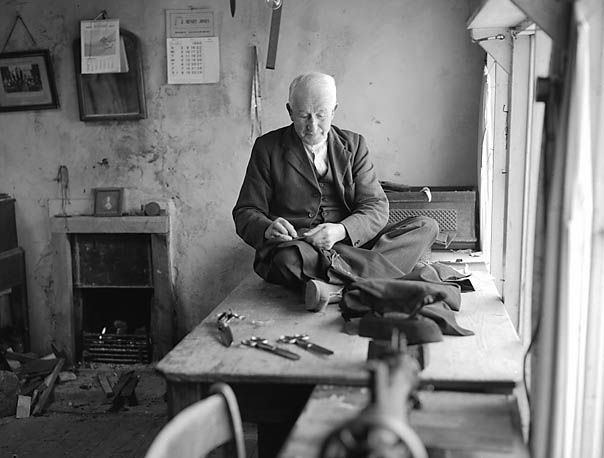
Geoff Charles, CC0, via Wikimedia Commons
Humans, we want to fit in, but also stand out.
Clothing has long been used by humans as a signalling device:
- I remember the example of the Ancient Romans whose toga praetexta was dyed purple at the border, signalling power and authority – since the Murex snail whose mucus was needed to produce the purple dye could not be acquired cheaply (it took thousands of snails to extract just a small amount of dye).
- Sumptuary laws in Medieval Europe were put in place to limit consumption and extravagance but also allowed people to easily figure out your social class.
- Pharaohs and upper classes in Ancient Egypt wore fine linen with intricate embroidered patterns while commoners wore plain attire. Examples are endless and there is no need for me to go deep in them.
The point is this: Humans want to fit in, but also stand out – And clothing is a way to do that. A way to communicate your uniqueness, your specialness, your ego.
Not just stand out, but be seen as superior.
What are the other ways one communicates their uniqueness? Countless.
The food one eats (vegan, organic, non-GMO), the car one drives (EVs), the music one listens to (classical), the packing one does (minimalist) and so on.
Each is a way to express how you are special, and in the world we live in today – better.
The drive to appear superior than the rest of the pack is innate in us, it is evolutionary programmed.
It allows for better mates, better access to resources, the ability to get work done (at other’s expense) without expending your own energy.
Hence, the power struggles we see of the past, the ones we see in the now and the ones we will inevitably see in future – is not changing.
The scale, the mode and the method of the struggle will change, but not the essence.
Clothing? Made by machines? Wondrous!
Anyway, back to where we were – prior to the Industrial Revolution, clothing was tailor-made.
Tailors would create custom-fitted garments for individuals, meaning it was a time-consuming and expensive process, meaning that the rich people could afford to have many articles of clothing, each bespoke and special and adorned with garnishes, while the poor people could count the simple items in their wardrobes on their fingers.
And hence, clothing, bespoke and elaborate clothing was a way for then rich to show that they were indeed, rich and worthy of being taken seriously and shown respect.
The Industrial Revolution and the abundance of shirts it produced changed the game. Initially everyone, the patricians and the plebeians wanted a piece of the action.
They all wanted to wear the novelty that was clothing made by machines.
But when the novelty faded the uppers started realising that what they were wearing while being chauffeured in their horse and buggy was the same as the plebby running besides it, hat in hand, begging for alms.
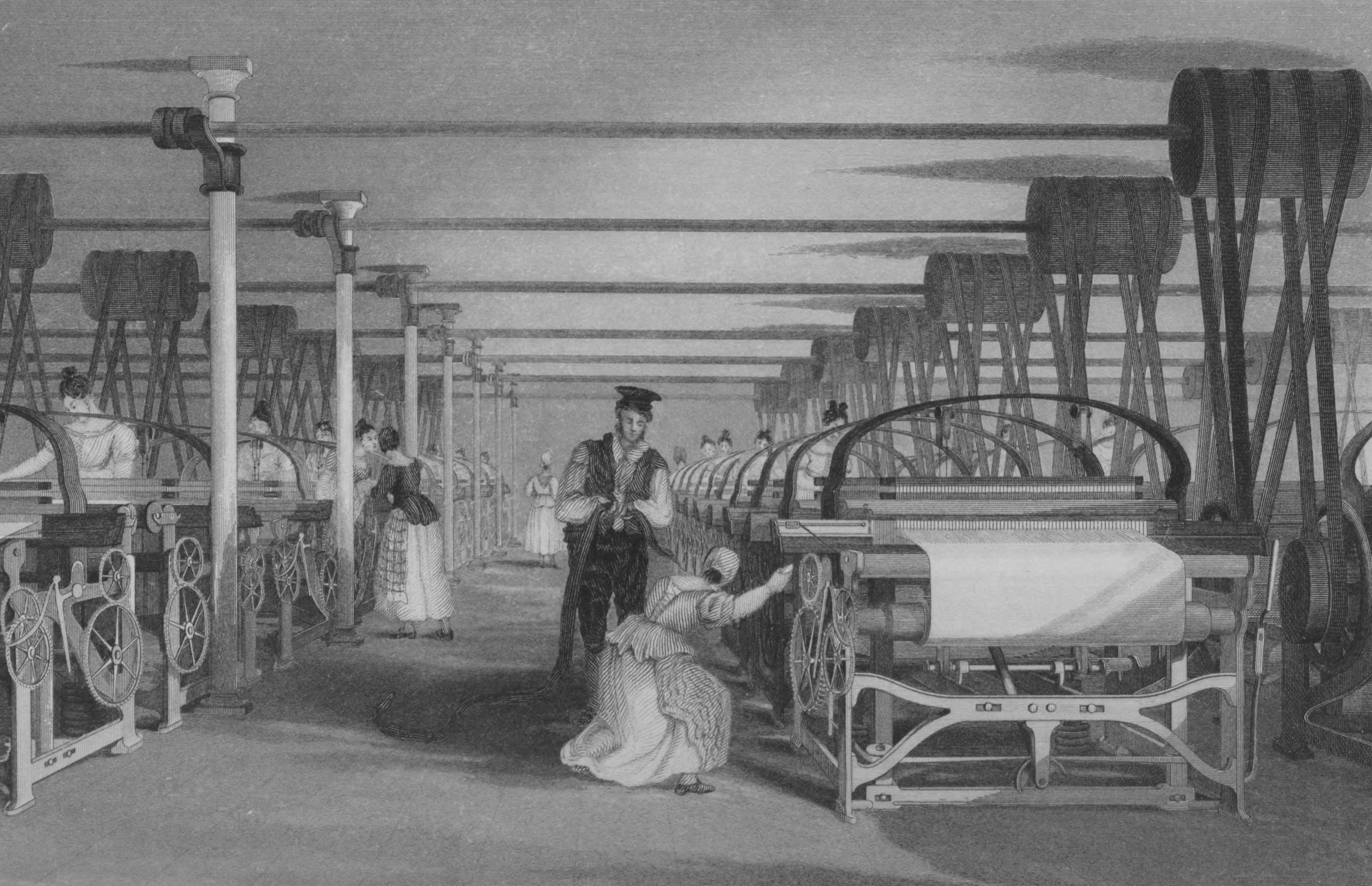
Novelty no longer novel, the elite sought ways to differentiate themselves once again.
This led to a resurgence of interest in bespoke and tailored clothing, where the uniqueness of the garments could set them apart from the masses.
Of course it cost them a lot more than ready-made garments.
Interesting, right? People would actually pay more for an article of clothing that they had to wait longer for and even then could not match the consistent precision of a machine made item.
Why? Because they could.
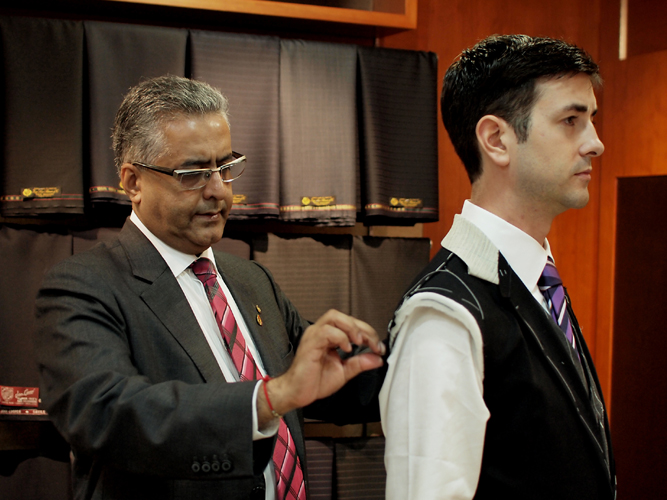
Rprakash1782, CC BY-SA 3.0, via Wikimedia Commons
The desire to signal superiority
So, what’s going on? More money than brains?
It may seem wasteful (and stupid) when you see the rich and the elite spend more for something human-made that machines today can provide for much cheaper. But the rich have a very different relationship with money than you or I.
When you don’t have something, it is a goal. When you have it, it becomes an instrument.
Money for the rich is an instrument because they have it already. Instruments enable options. The rich more freely use the instrument of money to get what they do not have (or think they could use more of): respect, admiration, the jealousy of others – you get the idea.
The signal is this: I have so much money that I can afford to spend it on the less economically prudent choice. Are you not impressed?
In this context the extravagant spend starts to make sense. It all comes back to evolutionary conditioning (for most of us). This is an essential part of being human, we’re always looking for ways to stand out and appear better than the rest.

We’ve seen this before:
- The automobile was a symbol of power and authority and then Henry Ford came along and made it affordable. So the elite sought cars that literally were produced through less efficient means like the hand built engines of Mercedes-AMG or the hand painted pinstripe line adorning the sides of a Rolls Royce.
- EVs are costly to buy today but they are getting cheaper with advancements in battery tech. and such. Plus their running costs are much cheaper than ICE vehicles. I will not be surprised if owning and running a ICE vehicle in 2040 is a sign that you have a lot of money.
And we’ll see it again:
- Watches/Pocket watches were once a sign of power and sophistication. But the introduction of affordable wristwatches in the early 20th century, and then affordable digital watches in the late 20th century allowed the average person to own a timepiece. A $150 watch from Casio has much more accurate and has more features than a $150000 mechanical watch from Patek Philippe – yet the rich would much prefer the latter over the former.
The desire to connect
Aside, there is also another motivation at play here, albeit small and somewhat indulgent – the desire for human connection.
People, at least some of them, purchase imperfect human made items precisely for that reason.
The imperfection is what makes the item precious, the shared humanity as a connecting thread between the creator and the consumer.
When you watch content like Business Insider’s “Still standing” and “So expensive” series, you get what I’m talking about.

Floor tile in Karpas, northeastern Cyprus – Orhan Bilgin (Zargan), CC BY-SA 3.0, via Wikimedia Commons
Who’s the rich guy now?
In a way, even though it might not feel like it, all of us are elites.
In their book, Abundance, Peter Diamandis and Steven Kotler talk about how we’re living in times of unprecedented abundance; “Right now a Masai warrior with a cell phone has better mobile phone capabilities than the president of the United States did twenty five years ago. And if he’s on a smart phone with access to Google, then he has better access to information than the president did just fifteen years ago.“.
Many others have spoken in similar terms, about how the average human today has so much more than what kings used to have just a few centuries ago, about how violence has declined, how lifespan is increasing.
If you’re a little older like me, read history, and/or are perceptive – you can personally attest to this.
This progress, monotonic since the 1800s (I feel), technological, social, cultural, economic, civic, has made our lives so much better (strictly objectively speaking)
This progress has transformed many things that were goals for us earlier into instruments now. In a way, even though it might not feel like it, all of us are elites.
Entire movie? Made by AI? Mind blowing!
As I write this today, the promise of AI is, well, exactly that, a promise. Companies like OpenAI, DeepMind and so many more try to give me pictures of what AI can do for me that will change my life into a productivity heaven.
But really, it’s a lot of marketing speak right now.
This does not mean that I am not impressed by AI, I am – But I think all the promises about how our lives will change are likely 10 years away from being delivered.
That said, I am impressed by what AI can do already – read dense legal contracts and assist lawyers, write code that works, read hundreds of books a day and summarise them, consume thousands of images and generate new ones, drive cars almost as well as the best drivers, play games of strategy better than any human, generate the cover image for this article and the list goes on.
- Pretty soon it will be generating things that takes humans years of practice to get good at – like music, movies, games, art.
- And then there is the fact that anyone today with an internet connected device can access some form of AI and have it create an ever increasing number of things.
- The (reasonable) content quality is one thing, and so is the democratic access to AI models, but the speed – the speed at which AI can create is the real kicker, there is no way humans can compete.
My prediction is that with AI models getting more powerful and more ubiquitous there will be a phase in the next 5 years where humans will use their personal AI agents to create all kinds of content for them, mass produced for an audience of one, and cheap to boot.
After all, who wouldn’t want such democratic and cheap access?
Are the days of human creators numbered?
I would venture to say: No, the days of human creators are not numbered, in fact, they may just be getting started for those who are good at their craft.
I believe what will save creator is the desire for humans to signal superiority and the desire for humans to connect with other humans1. Both desires are fundamental, hence I heave reasonable confidence in my prediction that follows.
As AI drives increasingly democratic access to cheap, decent quality content, readily available content – there should emerge a crop of humans that for reasons of social signalling and/or human connection will start preferring and paying for human made content.
Just like a hand-stitched seam, not necessarily mathematically perfect, but serving as the creator’s personal hallmark is something that humans, whether looking to signal superiority or looking for connection, will be willing to pay for – Similarly, the unique style of prose of an author or signature sound of a pianist, not necessarily perfect, something that humans, whether looking to signal superiority or looking for connection, will be willing to pay for.
And as I said before, progress in various areas have led us to a time of unprecedented abundance, which means many in the future should have the power to choose human made content over its cheaper and more easily available AI generated counterpart. Hence, the market for human made content, quality content I must add, should see an increase in the coming years once the novelty factor of AI has worn off.
Honest, quality human made content should always find a human market.
–
Aviral Prakash

- Indeed that is one of the reasons Sunchaser is, and will remain, proudly human made. ↩︎

Leave a Reply