

Why We Sleep by Matthew Walker

Name: Why We Sleep
Author(s): Walker, Matthew
Published: 2017
The Core Problem: Modern life has turned sleep — the body’s oldest and most essential repair system — into a negotiable luxury, and we are breaking down quietly while believing we’re fine.
The Bottom Line
- What it is: A deep, data-rich journey into the biological and psychological machinery of sleep — why it exists, what happens when you get enough (or too little) of it, and how it shapes memory, emotion, creativity, longevity, and even morality. Neuroscientist Matthew Walker translates decades of research into a single truth: sleep isn’t passive rest — it’s active maintenance for every system in your body and mind.
- Why it matters: Sleep is the foundation habit beneath every other habit. You can eat clean, train hard, meditate, and still fail to thrive if you don’t sleep well. Chronic sleep deprivation quietly erodes your memory, your focus, your emotional balance, your metabolism, and your health — while tricking you into thinking you’re doing fine. In modern culture, sleep deprivation has become a badge of honor; this book dismantles that illusion with clarity.
- What you’ll get: A clear understanding of how sleep works, the precise stages that refuel your mind and body, and why consistency matters more than intensity. You’ll also learn how to build an environment and daily rhythm that align with your circadian biology — from light exposure to caffeine timing to evening wind-down rituals.
Time Commitment:
Disclaimer: This content is intended for educational, commentary, and review purposes only. All opinions expressed are my own and are not affiliated with the author or publisher of the book. Any copyrighted material, including quoted excerpts, is used under the principles of fair use for criticism and analysis. For further information or to support the author, please refer to the links mentioned at the beginning of this page.
The Strategist’s Briefing
Every 24 hours there comes a time for you when you aren’t productive, don’t remember who you are or what you do, are paralysed and completely vulnerable.
Of course, I am talking about the time you sleep. For many of us sleep is a given, a fundamental condition we have to accept (and indeed, after a long day, are grateful to) – but if you think about it, from an evolutionary point of view, sleep seems to be a waste. The animal isn’t hunting, or feeding, or reproducing – it’s just laying around, unconscious and helpless.
For genes that want to propagate, programming the need for regular sleep seems like a brain-dead idea. And yet, through the millions of years of evolution where individual traits have come and gone due to natural selection, the need to sleep has persisted. This tells us that sleep is a pretty important thing, and if evolution decided to keep it around despite its apparent disadvantages, it must have had solid reasons to do so.
Sleep is perhaps the most effective thing you can do to reset your brain and body health every day. It’s as close we can get to an “undo button” in real life.
High-quality sleep provides numerous benefits for both brain and body, as we’ll get to learn in exquisite detail soon, some of which include:
- Memory consolidation: During deep sleep, the brain processes and stores information from the day, strengthening neural connections and improving learning.
- Cellular repair: Sleep triggers the release of growth hormones that repair tissues, build muscle, and strengthen the immune system.
- Toxin clearance: The brain’s glymphatic system becomes highly active during sleep, flushing out metabolic waste products including beta-amyloid proteins linked to cognitive decline.
- Emotional regulation: Adequate sleep helps regulate mood and reduces stress by allowing the brain to process emotions and reset stress hormone levels.
- Metabolic health: Quality sleep regulates hormones that control appetite and blood sugar, supporting healthy weight management and reducing diabetes risk.
- Cardiovascular protection: During sleep, blood pressure decreases, giving the heart and blood vessels time to rest and repair, reducing long-term cardiovascular disease risk.
- Cognitive performance: Well-rested individuals show improved focus, decision-making, creativity, and problem-solving abilities throughout the day.

Even if science weren’t there to tell us the benefits of good sleep, one can intuitively and through personal experience grasp them, and I think there will hardly be an adult (esp. those over thirty) who will not agree that quality sleep is important. Yet, two-thirds of adults across all developed nations don’t get the recommended eight house of nightly sleep.
Well, in which case we probably do need science to remind us of what happens when we don’t get high quality sleep. That, and more, in the book we’re reading this fortnight: Why We Sleep by Matthew Walker.

Matthew Walker is a Professor of Neuroscience and Psychology at the University of California, Berkeley, and the founder and director of the Centre for Human Sleep Science.
He received his degree in neuroscience from Nottingham University, UK, and his PhD in neurophysiology from the Medical Research Council in London.
He has published over 100 scientific research studies and is one of the world’s leading experts on sleep.
He also hosts the Matt Walker Podcast.
Dr. Walker’s book, Why We Sleep, brings together decades of sleep research to make a compelling case for prioritising sleep in modern life.

Core Frameworks Deconstructed
Citation: All text highlighted in yellow in this section is cited from – Walker, Matthew. Why We Sleep: The New Science of Sleep and Dreams. Paperback. 2018.
Not that it should need describing, sleep is a state of reduced mental and physical activity in which consciousness is altered and certain sensory activity is inhibited. During sleep, there is a marked decrease in muscle activity and interactions with the surrounding environment. While sleep differs from wakefulness in terms of the ability to react to stimuli, it still involves active brain patterns, making it more reactive than a coma or disorders of consciousness.
Sleep is one of the ancient, near universals of biological life, that is, “Without exception, every animal species studied to date sleeps, or engagees in something remarkably like it.“. Even plants sleep – Plants exhibit circadian rhythms and undergo periods of reduced activity that mirror sleep in animals. Charles Darwin observed that plants lower their leaves at night, and modern research has shown that even without external light cues, plants maintain these rhythmic behaviours, suggesting a period of sleep similar to animals.
Sleep-wake drivers
Primarily there are two things that determine how much you want to sleep at a given time: your circadian rhythm, and the amount of adenosine build up in your brain.
The circadian rhythm
Your circadian rhythm is like an internal clock that you never see but always feel. Using it, your brain and body tell what time it feels like – irrespective of the time that actually may be on the clock.
Have you ever gone to a place where you had to change time zones? I recently went to South Africa for a month, a place that is 3.5 hours behind New Delhi. For the initial few days I would feel that much of the day had passed only to realise that it was only lunch time, and I started getting drowsy in the evenings as if my body was ready to sleep.
The reason? My circadian clock was telling my brain and body that it was 6PM when it was actually 2.30PM, and 10PM when it was actually 6.30PM. This is what the circadian clock does, it tells your brain and body what time it feels like and basis that your brain and body do things that are appropriate to the time.

Not just humans, but anything that lives longer than a few weeks is likely to have a circadian clock. Actually, the better phase than have would be “… generate a circadian clock”. Based on a host of factors, sunlight being the most preferred but other stuff too like food intake and exercise, organisms try to figure out what time it is.
And unlike a regular clock, circadian clocks don’t mark discrete hours and minutes, but rather create a continuous cycle of physiological changes throughout the day, including fluctuations in alertness, body temperature, and hormone levels that influence when we feel awake or sleepy.
Where is this clock? Buried inside our brains is a structure called the suprachiasmatic nucleus, this tiny structure is the circadian clock. In humans this clock generally completes a full sweep every twenty-four hours (plus fifteen minutes give or take). After this period, the cycle starts over.

The suprachiasmatic nucleus works by telling the pineal gland to release a hormone called melatonin. Melatonin is like the warden in a boy’s hostel doing the rounds at 8PM telling everyone to go to bed. It tells the organs in your body when it is night time (and by its absence, when it is day time), and if your organs are being good little children, they will comply and do things that are appropriate to put the organism to sleep. Just like the warden, melatonin cannot force the organs to “sleep”, it can only tell them that now is a good time to go to bed.
Concept 1: Suprachiasmatic Nucleus and Melatonin
Principle: The suprachiasmatic nucleus (SCN) in your brain acts as a master clock, detecting light through your eyes. When darkness falls, the SCN signals the pineal gland to release melatonin, the “hormone of darkness.” Rising melatonin levels lower body temperature and promote drowsiness, opening the gate for sleep.
Application: Understanding the SCN-melatonin relationship helps you optimise your sleep in several practical ways:
- Temperature regulation: Understanding that melatonin lowers body temperature explains why keeping your bedroom cool (around 18°C) supports better sleep.
- Timing light exposure: Knowing that the SCN responds to light helps you understand why bright morning light helps you wake up and why dimming lights 1-2 hours before bed improves sleep quality.
- Sleep supplements timing: Knowing that melatonin naturally rises in darkness helps you understand when and why melatonin supplements might be helpful (and when they’re unnecessary).
Strategist’s Note: Interestingly, blue light from phones and laptops suppresses melatonin release. Understanding this mechanism explains why avoiding screens before bed leads to faster sleep onset. If you must use screens in the evening, enable blue light filters (Night Shift on iOS, Night Light on Windows), use apps like f.lux, wear blue-light-blocking glasses, or reduce screen brightness significantly to minimise melatonin suppression.
Melatonin follows a predictable daily pattern controlled by the suprachiasmatic nucleus. In the evening, as natural light diminishes, the suprachiasmatic nucleus signals the pineal gland to begin melatonin production. Melatonin levels typically start rising around 9PM (though this varies by chronotype, more on that later), reaching peak concentrations in the middle of the night, usually between 2AM and 4AM. This surge in melatonin coincides with your deepest sleep and lowest core body temperature. As dawn approaches and light begins to filter through (even with closed eyelids, as light receptors in the eyes can detect changing light levels), the suprachiasmatic nucleus instructs the pineal gland to cease melatonin production.
Levels drop sharply in the early morning hours, reaching their lowest point during daylight hours and remaining suppressed throughout the day.
This creates the characteristic melatonin curve: low during the day, rising in the evening, peaking at night, and falling again before dawn. Interestingly, exposure to artificial light—particularly blue light from screens—can suppress melatonin release even when it should naturally be rising, which is why evening screen time can interfere with sleep onset.

However, while our circadian clocks generally complete a full cycle in 24 hours, there might be differences in how that circadian cycle is aligned with the rising and setting of the sun. Which means that, for some people, their circadian clocks will signal “it’s day time” when it is, in fact, day time – but for some others, their circadian clocks may signal “it’s day time” when the day has been well underway for several hours. How your circadian clock maps to the movement of the sun is called your chronotype.
Concept 2: Chronotype
Principle: A chronotype is your body’s natural preference for when to sleep and wake compared to solar time, i.e. time based on the position of the Sun. It’s controlled by your circadian rhythm – your internal biological clock that regulates sleep-wake cycles over a 24-hour period. Your chronotype is largely determined by genetics, though it can shift slightly with age. Understanding your chronotype can help you optimise your schedule for peak productivity, better sleep quality, and improved overall wellbeing.
Application: There are generally four main chronotypes:
- Lions (Early Chronotype): Wake up early, most productive in the morning, prefer to sleep early
- Bears (Intermediate Chronotype): Follow the sun’s schedule, most common type, productive during standard working hours
- Wolves (Late Chronotype): Wake up late, most productive in the evening, prefer to stay up late
- Dolphins (Light Sleeper Chronotype): Irregular sleep patterns, sensitive to environmental disruptions, often struggle with sleep
Strategist’s Note: The modern world’s 9-5 structure is designed for Lions and Bears, creating significant challenges for Wolves and Dolphins.
- Wolves face: Social jetlag from forced early waking, productivity mismatches with their peak evening hours, stigma as “lazy”, and health risks from chronic sleep deprivation.
- Dolphins face: Hypersensitivity to modern sleep disruptors (light, noise, devices), anxiety loops about sleep itself, inconsistent performance from irregular patterns, and lack of workplace flexibility.
Adenosine build up
Adenosine is a neuromodulator that accumulates in the brain during waking hours as a by-product of cellular metabolism.

When neurons use energy, they break down a molecule called Adenosine Tri-Phosphate (ATP), and this produces adenosine as a by-product. As you stay awake, adenosine gradually builds up in your brain, especially in areas like the basal forebrain.
This adenosine attaches to special receptors on brain cells, which dampens the activity of chemicals that keep you alert (like acetylcholine and dopamine) whilst boosting signals that promote sleep.
The longer you’re awake, the more adenosine accumulates, creating an increasing “sleep pressure”—that growing feeling of tiredness. This pressure continues to mount until you finally sleep, at which point your brain clears away the adenosine, allowing you to wake up feeling refreshed.
Concept 3: Sleep Pressure
Principle: Sleep pressure is the growing drive to sleep that builds up the longer you stay awake. This pressure is primarily caused by the accumulation of adenosine, a neurochemical byproduct of cellular metabolism in the brain.
How it works: Neurons produce adenosine as they use energy (ATP) → Adenosine binds to brain receptors (A1 and A2A), inhibiting neural activity and promoting sleepiness → The longer you’re awake, the more adenosine accumulates, increasing sleep pressure
Application: Understanding sleep pressure helps you optimize your daily performance and health in several practical ways:
- Managing all-nighters: Recognising that adenosine accumulates continuously during extended wakefulness explains why staying up late studying or working becomes increasingly counterproductive—the sleep pressure impairs cognitive function, memory consolidation, and decision-making
- Strategic napping: Knowing that sleep pressure builds throughout the day, you can time short naps (10-20 minutes) in the early afternoon to temporarily reduce adenosine levels without entering deep sleep, giving you a performance boost without disrupting night-time sleep
- Caffeine timing: Understanding that caffeine only masks sleep pressure (rather than eliminating it) helps you use it strategically—consuming it early in the day when you need alertness, and avoiding it 6-8 hours before bed so the adenosine can do its job when you want to sleep
Strategist’s Note: This is how caffeine works as a stimulant—it blocks adenosine receptors, temporarily preventing adenosine from signalling sleepiness, though the adenosine continues to accumulate in the background. And when the effect of coffee finally wears off (thanks to your liver), that is, when the receptors are free and latch on to the adenosine that has built up, you get what is known as the “caffeine crash”.
Adenosine and melatonin work on different timescales and through different mechanisms, but both contribute to making you feel sleepy.

Adenosine builds up linearly throughout the day. From the moment you wake up, it starts accumulating in your brain as a by-product of neural activity.
Think of it like a slowly filling bucket—after one hour awake, you have a little adenosine; after eight hours, you have quite a lot; after sixteen hours, the pressure to sleep becomes very strong.
This is why you feel progressively more tired as the day goes on, regardless of what time it actually is.
If you stay awake for 24 hours straight, adenosine continues mounting, creating immense sleep pressure.
Melatonin, on the other hand, doesn’t build up linearly. Instead, it follows a cyclical pattern tied to your circadian rhythm. It remains low throughout the day, then rises relatively quickly in the evening (usually starting around 9PM), peaks in the middle of the night, and drops sharply in the morning.
Unlike adenosine, melatonin levels don’t keep increasing the longer you’re awake—they follow the clock, not your wakefulness.

Here’s a helpful analogy: adenosine is like a timer counting up from zero—the longer it runs, the higher the number gets. Melatonin is like an alarm that goes off at a scheduled time each day, regardless of what the timer reads. You need both to feel properly sleepy: adenosine creates the pressure to sleep (the feeling of tiredness), whilst melatonin signals the timing of sleep (telling your body “now is the time”).
This is why you can feel exhausted in the middle of the day (high adenosine) but not fall asleep easily (low melatonin), or why you might feel a “second wind” late at night despite being awake for many hours (adenosine is high, but if your circadian rhythm hasn’t quite peaked its melatonin release, you might not feel as sleepy as the adenosine alone would suggest).
Sleep-wake Switch
While adenosine and the SCN determine how much you want to sleep at a given moment, whether you actually go to sleep at that moment is determined by two other things: the thalamus and orexin.
Concept 4: The Thalamus and Orexin
Principle: The thalamus and orexin influence whether you actually go to sleep when you feel sleepy.
- The Thalamus – Gatekeeper of Consciousness: The thalamus sits deep in the brain and acts as the router for almost all sensory input — vision, hearing, touch, taste — to the cortex. When you’re awake, this gate is wide open, streaming data into awareness. As you fall asleep, inhibitory signals from the ventrolateral preoptic nucleus (VLPO) of the hypothalamus begin silencing the thalamus. The gate closes, sensory input is dampened, and external reality fades.
- Orexin – The Stability Switch: Orexin (also called hypocretin) is a neuropeptide produced in the hypothalamus that keeps the sleep-wake “flip-flop” stable. Think of it as the toggle that prevents flickering between on and off states. When orexin levels are high, wakefulness circuits stay active — attention sharpens, motivation rises, and the thalamus remains open to sensory input.
As the homeostatic need for sleep increases and circadian cues shift, orexin neurons quiet down. The gate closes, and sleep begins.
Application: If you want to regulate your own thalamic gate and orexin switch, protect both circadian rhythm and sleep pressure.
- Keep light exposure consistent (bright in the morning, dim in the evening).
- Avoid caffeine late in the day, which artificially boosts orexin and keeps the gate open.
- Create a wind-down ritual so VLPO neurons can take over naturally.
Strategist’s Note: Your ability to perform, focus, and feel emotionally stable depends less on willpower and more on whether this ancient gate opens and closes smoothly. Orexin is the key that holds the door steady; the thalamus is the door itself. Modern life’s assault of blue light, caffeine, and irregular schedules constantly jiggles the handle. Guard the switch, and the gate will take care of the rest.
Together, these systems create a dual-control model: adenosine pushes you toward sleep, the SCN pulls you toward wakefulness when it senses daylight; orexin and the thalamus mediate the tug-of-war between them, deciding whether consciousness stays on or powers down.
Sleep stages
When you are sleeping, your brain cycles between two key sleep stages: rapid eye movement (REM) sleep, and non-rapid eye movement (NREM) sleep. As you can understand, REM sleep is where your eyes move rapidly back and forth underneath your eyelids, even though you are asleep. Within NREM, there are further four stages – 1 to 4 – with the higher number corresponding to how deeply you are asleep. Together, these sleep stages define, essentially, what your brain is up to while you sleep. And turns out, there is a lot that it is up to.
A journey through sleep
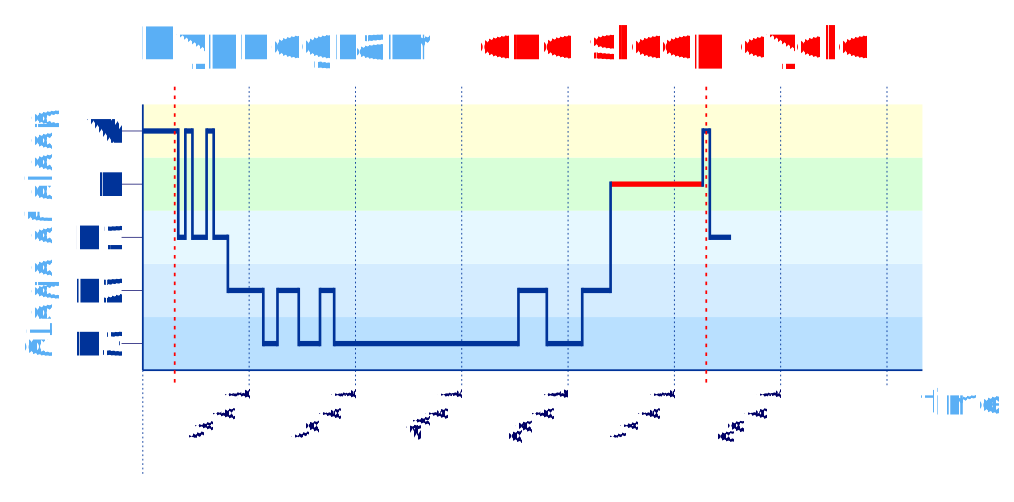
As you drift off to sleep, your brain always starts by getting into NREM, i.e. deep sleep. Sometimes it may start directly into NREM Stage 2, sometimes it may start with NREM Stage 1, but it always starts in NREM. A little bit later though it shifts to REM sleep, the one where your eyes are rapidly moving under your eyelids. After the REM phase, one of two things may happen, depending on where you are on your circadian rhythm – either you go back into NREM, or you wake up. In any case, this cycle from NREM to REM constitutes one sleep cycle. Scientists have measured this sleep cycle to last about ninety minutes.
Which means, that for a healthy adult who sleeps eight hours, there are about five sleep cycles they go through each night.
As you’ll see from the image, although each NREM-REM sleep cycle lasts about ninety minutes, the proportion of NREM to REM sleep in each individual cycle varies greatly – as Walker calls it, they are repeated by asymmetric. NREM is usually higher in proportion in the earlier cycles, while REM is more prevalent in the later cycles. This means that not all sleep loss is equal: if you wake up early and miss the last few hours of sleep, you lose more REM sleep. If you go to bed late and miss the first few hours, you lose more NREM sleep. Each type of sleep loss affects you differently.
Brain Waves
In your brain is electrical activity. Neurons in your brain produce electrical signals as part of normal functioning. Each time a neuron “fires”, that electrical signal (pulse) can be measured using techniques like EEG (electroencephalography). What neuron fires and how varies depending on what you’re doing—whether you’re awake, asleep, concentrating, or relaxing.
When millions of neurons fire together, we call it a brain wave – Individual neurons generating electrical impulses combine to create rhythmic patterns. There are different types of brain waves (like alpha, beta, theta, and delta waves) that correspond to different states of consciousness and mental activity—essentially, they’re the “signature” of what your brain is doing at any given moment.
The frequency and amplitude of brain waves reflect how synchronised neuronal activity is. When many neurones fire in sync, they create stronger, more regular wave patterns. When neurons fire more randomly or independently, the resulting brain waves are less organised and may have higher frequencies with lower amplitudes.
If you want to learn how billions of neurons combine to create the intelligent “you”, ready my Field Note on Max Bennett’s A Brief History of Intelligence.
Now, depending on the sleep stage we’re in, NREM or REM, our brain wave patterns vary significantly. During wakefulness, your brain produces fast, irregular beta waves as millions of neurons fire independently, processing the constant stream of sensory information around you. As you begin to relax and close your eyes, these shift to slightly slower alpha waves.
- When you enter NREM Stage 1 (the lightest sleep), brain waves slow down further into theta waves. This is a brief transitional phase lasting just a few minutes.
- In NREM Stage 2, your brain produces distinctive patterns called sleep spindles (brief bursts of rapid brain activity) and K-complexes (sudden sharp waves).
- NREM Stages 3 and 4 are often called “deep sleep” or “slow-wave sleep” because the brain produces very slow, high-amplitude delta waves. This is when neurons fire in highly synchronised patterns.
- During REM sleep, brain waves become fast and desynchronised again, resembling the patterns seen during wakefulness. This is why REM is sometimes called “paradoxical sleep”—your brain is highly active (and this is when most vivid dreaming occurs), yet your body is essentially paralysed to prevent you from acting out your dreams.

The brain’s operating modes across wakefulness and sleep:
- During wakefulness, your brain is in full “input mode”—actively processing sensory information from your environment, making decisions, forming memories, and maintaining conscious awareness. Neurons fire rapidly and independently, creating fast, irregular brain waves as different brain regions work on different tasks simultaneously. Your brain is oriented outward, focused on perceiving and responding to the external world.
- In NREM sleep, particularly deep slow-wave sleep, your brain shifts into “maintenance mode”. Instead of processing external information (your sensory systems are largely offline), it focuses inward on consolidation and restoration. Neurons fire in highly synchronised, rhythmic patterns—like a coordinated reset. This is when your brain strengthens important memories, clears out metabolic waste that accumulated during the day, and performs essential cellular repair. It’s essentially the brain’s housekeeping phase.
- During REM sleep, your brain enters what might be called “integration mode” – a sort of in-between stage between wakefulness and deep sleep. Brain activity becomes as intense as wakefulness, but it’s disconnected from external input and motor output (you’re paralysed to prevent acting out dreams, “… instigated by a powerful disabling signal that is transmitted down the full length of your spinal cord from your brain.”. This is when your brain makes creative connections between disparate pieces of information, processes emotional experiences, and consolidates procedural memories. The brain is essentially running simulations—this is when vivid dreaming occurs—allowing it to explore possibilities and integrate new learning with existing knowledge without the constraints of reality.
In essence: wakefulness is for input and action, NREM is for consolidation and repair, and REM is for integration and creativity. Each mode serves distinct but complementary functions in maintaining brain health and cognitive performance.
REM as a superpower
- Which one is more important? NREM or REM? Both. Although your body will first go to NREM sleep after it has been sleep deprived for say, one night without sleep; it will prefer more REM sleep over the next few nights as it tries to recover the loss.
- If you think about what happens in each phase, you can intuit which came first: NREM or REM. Since any organism needs to be able to repair itself as it battles entropy, NREM sleep, which is about repair and recovery, was the first one to appear on the evolutionary timeline. On the other hand, REM sleep, which is about creativity, thinking, building mental models – all important, but still secondary to repairing literal damage to the body – emerged later.
- However, just because REM sleep emerged later does not mean that it is secondary, or less relevant to NREM sleep. In fact, Walker posits that it might be the reason that humans are the dominant species on Earth. He reasons that when the first members of Homo Erectus started using fire, they were able to deter predators and sleep on the ground (instead of sleeping on trees like their other primate cousins). Being able to sleep on the ground soundly without risk of falling out from the tree and without (as much) fear of being eaten by a lion – we were able to indulge is more REM sleep without as significant consequences that come from being completely paralysed.
- Due to this extended period of REM sleep we were able to build more complex models of the world, engage in (and comprehend) more complex social and cultural activity. And as both Max Bennett and Yuval Harari make the case in A Brief History of Intelligence and Sapiens respectively, our ability to engage complex social games and built huge communities far beyond Dunbar’s number is the reason we’re at the top of the food chain. Walker writes, “… REM sleep increases our ability to … successfully navigate the kaleidoscope of socioemotional signals that are abundant in human culture … the REM-sleep gift of facilitating accurate recognition and comprehension allows us to make more intelligent decisions and actions as a consequence … this is the most influential function of REM sleep …”.
Let’s talk about your dreams
Dreaming mainly occurs during REM sleep, the mysterious phase of the night that punctuates our deep NREM cycles. During this phase, the sleeping brain lights up like Times Square: REM sleep shows a spike in activity across four key regions — the visuospatial areas that generate vivid imagery, the motor cortex that simulates movement, the hippocampus that retrieves memories, and the amygdala, the emotional command center. Meanwhile, parts of the prefrontal cortex — the seat of logic, reasoning, and self-control — fall quiet.
You will remember from earlier that each phase had a goal: during wakefulness we observe, during NREM sleep we commit things to memory, and during REM sleep we think about what we observed and remember.
Walker writes: “REM sleep can therefore be considered as a state characterised by strong activation in visual, motor, emotional, and autobiographical memory regions of the brain, yet a relative deactivation in regions that control rational thought.”
This peculiar neurochemical cocktail — emotional intensity without rational restraint — explains the bizarre creativity and raw realism of dreams. It’s also why we wake up sometimes wondering, What was that?
Dreams and overnight therapy
Believe it or not, dreams aren’t random nonsense. They are emotionally intelligent acts of the sleeping mind.
During REM sleep, your brain replays strong emotional experiences from the day, but in a chemically safe space. Normally, stress floods the brain with noradrenaline, the arousal chemical that primes you for fight or flight. But during REM sleep, the concentration of noradrenaline drops to zero — a condition unmatched by any waking state.
This unique neurochemical environment allows the brain to re-experience emotional memories without the painful stress response that originally accompanied them. It’s as though the mind says, “Let’s look at that again, but this time, without panic.” Over repeated nights, the brain extracts the lessons from the event and discards the pain. That’s why, after enough sleep, you can think about a difficult experience without feeling shattered — you haven’t forgotten it, “… but you have cast off the emotional charge or at least a significant amount of it.”
But note: this emotional resolution doesn’t happen automatically — you must actually dream about the emotionally charged event during REM sleep for the therapeutic effect to occur.
Beyond emotional processing, REM-sleep dreaming fine-tunes our social intelligence — our ability to read faces, tone, and nuance. “Deprive an individual of their REM-sleep dreaming state, and the emotional tuning curve of the brain loses its razor-sharp precision.”

Without REM sleep, people misread neutral expressions as hostile and lose balance in emotional interpretation. This nightly recalibration happens throughout life but peaks in adolescence, the crucible where identity and emotional understanding are forged. Dreams, therefore, are both a counselor and a social coach, letting us wake up emotionally balanced and socially attuned.
Dreams as a creative playground
Dreaming doesn’t just heal — it creates. There have been several examples of men and women who were battling a difficult problem or had hit an artistic block, unable to move ahead for several months or even years. And then the seemingly magical happened: they went to sleep, still mulling over the problem, and woke up with the answer ready in their mind. As if all the pieces had miraculously fallen into place. Those men and women have the power of dreams to thank for their revelation.

History is full of people who went to bed frustrated by an unsolved problem and woke up with an answer.
- Chemist Friedrich August Kekulé dreamt of a snake biting its tail and awoke to propose the circular structure of benzene.
- Paul McCartney woke with the melody of Yesterday fully formed in his head.
- Elias Howe dreamed of being attacked by warriors with spears that had holes in their tips — and designed the sewing machine’s needle.
What makes REM dreams so powerful is their unbounded associative network. Unlike waking consciousness or NREM sleep — which are linear, logical, and adjacent in their associations — “The REM-sleep dreaming brain was utterly uninterested in bland, commonsense links … No longer are we constrained to see the most typical and plainly obvious connections between memory units … the brain becomes actively biased towards seeking out the most distant, nonobvious links between sets of information.”
This cognitive state is called relational memory processing — the mind’s ability to find hidden relationships between unrelated ideas and recombine them in novel ways.
Concept 4: Relational Memory Processing
Principle: During REM sleep, the brain reactivates and recombines disparate memory fragments, linking information across remote domains — a process called relational memory processing. It fuels creative insight by relaxing logical constraints and encouraging non-linear connections.
Application: To leverage this, first load your mind deliberately before sleep — study, brainstorm, or meditate deeply on a problem. Then step aside. Let REM do its work overnight. The next morning, record any ideas that surface; often the solution will emerge after your brain’s nocturnal remix.
Strategist’s Note: Creativity rewards those who prepare before surrendering. You can’t dream up something you haven’t first wrestled with. REM is not a substitute for work — it’s the alchemist’s furnace that transforms raw material into insight.
But don’t expect novel ideas to naturally pop into your head any time you sleep. For this to actually work you first need to actively tackle the problem in your waking hours, perhaps for several days, really steep in it. Having put in this work you then need to, well, wait for your REM-sleep induced brain to dream about that specific problem, and not anything else.
Dreaming beyond logic
Beyond solving puzzles, REM sleep also promotes abstraction — the ability to perceive general rules rather than individual cases. In one experiment Walker cites, participants were given mathematical problems with a hidden shortcut. After sleeping, 60% of them discovered the rule; only 20% of the sleep-deprived did. The sleeping brain, it seems, doesn’t just remember — it understands.
Some go even further and try to consciously steer their dreams through lucid dreaming — aware that they’re dreaming and able to influence it. This can amplify creativity, letting dreamers prototype ideas, practice skills, or process emotions in a boundless mental sandbox.

A Slumbering Journey from Infancy to Old Age
Infancy and early childhood
Having your child fall sick is not a good feeling, and it is especially worse with a first child during the early years when you are new as a parent as well, even the smallest of illnesses cast dark clouds over the home. It has been no different with me as I have been experiencing fatherhood for the first time with my young daughter. But over time you start taking things a little easy, having had a few bouts of your child getting the cold or cough trains you well enough to take the necessary steps should the situation repeat itself. You start to get that kids just can’t help getting dirty and doing things that have the risk of getting hurt; you start to understand that it’s all part of the evolutionary plan as Jonathan Haidt explained so well in The Anxious Generation.

During these times that my child gets sick or hurts herself, I’ve also found comfort in reminding myself of the fact that besides being looked after by her loving parents, she also has the most powerful of forces watching her back: Mother Nature herself. It’s true, a young child literally has all the creative forces of evolution pushing them to grow and become stronger.
Evolution has equipped children with an incredible array of survival mechanisms that work together like a safety net. Their bodies prioritise growth and healing extracting nutrients from all kinds of food, with immune systems that learn rapidly from each new challenge and repair mechanisms that work far more efficiently than in adults. These systems overlap and back each other up, so if one falters, others step in—all working in concert to guide them towards becoming healthy, capable adults. It’s a powerful reminder that whilst our parental love and care matter enormously, we’re also supported by millions of years of evolutionary wisdom designed specifically to help children thrive.
Mother Nature also lavishes the same TLC when it comes to how infants sleep. Infants require significantly more sleep than adults—typically 14 to 17 hours per day for newborns (0-3 months) and 12 to 15 hours for older infants (4-11 months). This sleep is distributed across both day and night, with multiple naps throughout the day.
This abundant sleep serves crucial developmental purposes: during sleep, an infant’s brain is extraordinarily active, forming new neural connections at an astonishing rate—up to one million new synapses per second. Sleep also supports the consolidation of new skills and experiences, helps regulate emotions, and promotes physical growth through the release of growth hormones.
This growth in neurons, called neurogenesis, and the development of connections between those neurons, called synaptogenesis – occurs at an extraordinary rate that far exceeds what happens at any other stage of life. This process is particularly vigorous during the first few years, with the infant brain creating synaptic connections with remarkable exuberance, producing far more synapses than will ultimately be needed in adulthood.
This overproduction is not wasteful but rather reflects an evolutionary strategy: by generating an abundance of neural connections, the infant brain creates a rich substrate from which experience can sculpt the most useful pathways. The brain essentially casts a wide net, forming connections between neurones throughout the developing cortex, creating potential pathways for every conceivable skill, language sound, and cognitive ability the child might need.

Different regions of the brain experience peak synaptogenesis at different times. The visual cortex reaches peak synaptic density around 3-4 months of age, whilst the prefrontal cortex—responsible for higher-order thinking and executive functions—doesn’t reach its peak until later in childhood. This temporal sequence reflects the developmental priorities: sensory systems mature first, followed by motor systems, and finally the more complex cognitive systems.
The architecture of infant sleep differs dramatically from adult sleep as well. Infants spend about 50% of their sleep time in REM (rapid eye movement) sleep—the stage associated with dreaming and neural development—compared to just 20-25% in adults. This high proportion of REM sleep reflects the intense brain development occurring during infancy, as REM sleep plays a vital role in building and strengthening the neural pathways that will serve them throughout life. Walker writes: “REM sleep acts as an electrical fertilizer … [stimulating] lush growth of neural pathways all over the developing brain …”

And although Mother Nature is trying her hardest to grow the infant’s brain and body, she can only do so much if the parents involved are unwise. Although there are many things that can parents can do wrong, the one of primary concern to Walker as a sleep scientist are things that can disrupt a baby’s sleep, and near the top of that list is alcohol consumption during pregnancy and nursing; “An infant brain without sleep will be a brain ever underconstructed.” (emphasis mine).
Alcohol particularly impairs REM sleep in infants, which is critical for brain development. Since infants spend approximately 50% of their sleep time in REM sleep—far more than adults—any disruption to this stage can have significant developmental consequences.
Alcohol readily crosses the placental barrier during pregnancy, meaning that when a pregnant woman drinks, the foetus is exposed to alcohol at similar concentrations. This exposure can interfere with the delicate processes of brain development occurring in utero.
Epidemiological studies have established links between maternal alcohol consumption during pregnancy and an increased likelihood of neuropsychiatric conditions in children, including autism spectrum disorders, attention deficit disorders, and other developmental challenges.
Alcohol is readily absorbed into breast milk, with concentrations in milk closely mirroring those in the mother’s bloodstream. This means that nursing infants can be exposed to alcohol through breastfeeding, potentially disrupting their crucial REM sleep and the associated brain development that occurs during this stage.

Initially, the infant’s sleep is polyphasic—they seem to sleep at any time and wake up at any time, which far too often is in the middle of the night to the chagrin of their parents (ask me). This irregular pattern reflects the immaturity of their circadian system at birth. The suprachiasmatic nucleus (SCN) is not fully developed or operational at the time of birth and takes several months to mature and establish its rhythmic control over sleep-wake cycles.
Gradually, with consistent exposure to environmental cues—known as zeitgebers—the infant’s circadian rhythm begins to synchronise with the 24-hour day-night cycle. These zeitgebers include the regular rising and setting of the sun (light exposure), scheduled feeding times from the mother, ambient temperature fluctuations, and social interactions. These external signals help entrain the developing SCN, teaching it to coordinate the infant’s sleep-wake patterns with the external world.
By around three to four months of age, most infants begin to show more consolidated nighttime sleep and more predictable wake periods during the day. This maturation continues throughout early childhood, and by the age of four, most children will have settled into a biphasic sleep pattern consisting of a daytime nap (typically one to two hours in the early afternoon) and a longer consolidated period of nighttime sleep (approximately 8-10 hours). This biphasic pattern persists through early childhood before eventually transitioning to the monophasic sleep pattern typical of adults, where sleep occurs in a single consolidated period at night (more on this later).
All this while NREM is increasing and REM is reducing for the child, and it “… will finally stabilize to an 80/20 NREM/REM sleep split by the late teen years, and remain so throughout early and midadulthood.”.
Late childhood and adolescence
Following the period of exuberant synaptogenesis during a child’s younger years comes a process called synaptic pruning, which extends throughout late childhood and into adolescence. During pruning, synapses that are frequently used are strengthened and retained, whilst those that are rarely activated are eliminated. This “use it or lose it” principle allows the brain to become more efficient, streamlining its neural architecture based on the individual’s actual experiences and environment. Sleep plays a crucial role in both processes—supporting the initial formation of synapses during REM sleep and facilitating the selective pruning and strengthening of connections during NREM sleep.

As an interesting fact, this synaptic pruning process begins at the back of the brain and makes it way to the front, and the front happens to be where our pre-frontal cortex is – the place which is responsible for, among other things, thinking before acting:
- Impulse control and self-regulation: The ability to pause and consider consequences before acting
- Risk assessment: Evaluating potential dangers and weighing long-term outcomes against immediate rewards
- Emotional regulation: Moderating emotional responses and managing mood
- Planning and organisation: Thinking ahead and coordinating complex sequences of actions
- Social judgement: Understanding social cues and making appropriate decisions in social contexts
Meanwhile, other brain regions mature earlier. The limbic system—particularly the amygdala, which processes emotions and rewards—develops more rapidly and reaches relative maturity before the prefrontal cortex. This creates a neurological imbalance: adolescents have a fully developed “accelerator” (the reward-seeking, emotion-driven limbic system) but an underdeveloped “brake” (the rational, consequence-evaluating prefrontal cortex).
This mismatch helps explain many characteristic adolescent behaviours: heightened sensation-seeking, increased risk-taking, intense emotional responses, susceptibility to peer influence, and difficulty with long-term planning. It’s not that adolescents don’t understand risks intellectually—they often do—but rather that their brains are structurally biased towards immediate rewards and emotional intensity over careful deliberation.
The pruning process in the prefrontal cortex continues into the mid-twenties, which is why decision-making, impulse control, and risk assessment typically continue to improve throughout early adulthood. This developmental timeline has important implications for education, parenting, and policy decisions regarding adolescent responsibility and autonomy.
Another thing that has implications for teen parenting, among other things, is that the circadian clock in adolescents shifts forward, which means they want to go to sleep later than their parents and wake up later as well.
This circadian shift is biologically driven and not simply a matter of choice or poor discipline. During puberty, the release of melatonin—the hormone that signals the body to prepare for sleep—occurs approximately two hours later than in adults. This means that whilst a adult might naturally feel sleepy around 9 PM, a teenager’s brain doesn’t begin releasing melatonin until around 11 PM or even midnight.
This delayed circadian rhythm creates a fundamental mismatch with typical school start times. Most secondary schools begin classes between 7:30 and 8:30 AM, requiring adolescents to wake during what is still, biologically speaking, their time to sleep. Since teenagers still require 8-10 hours of sleep for optimal functioning, the early school start time effectively forces them to choose between getting adequate sleep and meeting their school obligations—a choice that most resolve by becoming chronically sleep-deprived.

The consequences of this mismatch are substantial. Sleep-deprived adolescents show impaired academic performance, increased risk of mood disorders (particularly depression and anxiety), higher rates of behavioural problems, greater susceptibility to accidents (especially car accidents amongst teenage drivers), and increased health risks including obesity and weakened immune function.

Despite this, many educational systems continue to maintain early start times, often citing logistical challenges such as transportation schedules, extracurricular activities, and parental work schedules. Walker argues that these practical concerns, whilst understandable, come at the cost of adolescent health, wellbeing, and educational outcomes—suggesting that society has effectively prioritised administrative convenience over the biological needs of developing brains. He writes: “… neither society nor our parental attitudes are well designed to appreciate or accept that teenagers need more sleep than adults, and that they are biologically wired to obtain that sleep at a different time from their parents.”.
Understanding that a teenager’s late-night wakefulness is biologically driven rather than deliberate defiance can help reduce family conflict. Parents who insist on early bedtimes may be fighting against their adolescent’s biology, creating unnecessary stress for both parties. Instead, recognising this developmental phase and working within its constraints—for instance, by ensuring consistent sleep schedules on weekends and minimising sleep disruptions—may prove more effective.
Early adulthood and middle age
As early adulthood rolls around the teen circadian clock that had shifted a few hours forward shifts back to where it will remain for a long time.
During early and middle adulthood, sleep remains relatively stable compared to the dramatic changes of childhood and adolescence. The 80/20 NREM/REM split established in late adolescence persists throughout this period. Some changes do occur gradually over these decades, but they are slow. Overall, this is a good time from a sleep perspective (as it is, honestly, for the rest of the body).
The most notable change as one starts middle adulthood is a gradual decline in the quantity and quality of deep NREM sleep (specifically Stage 3 and Stage 4 sleep, the “slow-wave sleep”). This decline begins in the late twenties and continues progressively through middle age. By the time individuals reach their fifties, they may have lost 60-70% of the deep sleep they experienced in their late teens and early twenties.
This reduction in deep sleep has important implications because slow-wave sleep is particularly restorative. It’s during these deepest stages of NREM sleep that the brain performs critical maintenance functions: clearing metabolic waste products, consolidating memories from short-term to long-term storage, and facilitating physical restoration and immune system strengthening.
The architecture of sleep also changes subtly. Adults in this age range tend to experience more frequent awakenings during the night, though many of these are brief enough that they’re not consciously remembered. Sleep becomes more fragmented, with less time spent in the deepest, most restorative stages.

For many adults, this period is also marked by significant lifestyle factors that can disrupt sleep: work pressures and irregular schedules, caffeine and alcohol consumption, stress and anxiety, electronic device usage before bed, and for some, the arrival of children which may dramatically disrupt parental sleep for several years (again, ask me).
It’s worth noting that whilst some decline in deep sleep is a natural part of ageing, much of the sleep disruption experienced during early and middle adulthood is preventable and stems from lifestyle choices rather than inevitable biological changes. Maintaining good sleep hygiene during these years can help preserve sleep quality and quantity (more on this later).
Old age
You would have heard that old age is like a second childhood. There is truth to that statement, but with at least one exception: Mother Nature ain’t got your back. From an evolutionary POV you’ve been used. If you’re in your sixties and beyond, you’ve likely sired/birthed a few children, and those kids have likely grown up, and maybe had kids of their own. Within a decade your grandkids too will be independent enough (teens). So, by this time, one has to pay extra special attention to their their health, and of course, sleep is a big part of that.
First of all, that “… older adults simply need less sleep is a myth.”. The truth is that there are definite biological reasons that impair sleep as an individual gets older:
- Reduced quantity and quality of sleep: As we age, we tend to get less of the deeply restorative NREM stage 3 and stage 4 sleep. And by the time one is seventy years old they “… will have lost 80 to 90 percent of [their] youthful deep sleep.”. And although the ailments of old age are caused by a variety of factors, poor sleep is a reason or a contributing factor behind several. Walker writes: “… elderly individuals fail to connect their deterioration in health with their deterioration in sleep, despite causal links between the two …”, and further, “… parts of our brain that ignite healthy deep sleep at night are the very same areas that degenerate, or atrophy, earliest and most severely as we age.”.
- Reduced sleep efficiency: Sleep efficiency refers to the percentage of time spent actually asleep whilst in bed.
Concept 5: Sleep Efficiency
Principle: Sleep efficiency is the percentage of time spent actually asleep while in bed, calculated by dividing total sleep time by total time in bed. It serves as a key metric for assessing sleep quality, distinct from sleep duration alone.
Application: For example, if someone spends eight hours in bed but only sleeps for six of those hours, their sleep efficiency is 75%. Healthy young adults typically have sleep efficiency ratings of 90% or higher, meaning they spend most of their time in bed actually asleep. However, older adults often experience significantly reduced sleep efficiency, sometimes dropping to 70-80% or lower. This means they may spend considerable time lying awake in bed, either struggling to fall asleep initially, waking multiple times during the night, or waking early and being unable to return to sleep. This fragmentation compounds the already reduced quantity of deep sleep, further diminishing the restorative benefits of their rest.
Strategist’s Note: The poorer your sleep efficiency, the more likely you are to die compared with someone who is the same as you but has better sleep efficiency. This relationship holds even after controlling for total sleep time, suggesting that the fragmentation and quality of sleep matters independently of duration.
- Disrupted sleep timing: Like teenagers, older adults see a shift in their circadian clock too – but in the opposite direction. Whilst teenagers experience a delay in their sleep-wake cycle (wanting to sleep and wake later), older adults typically find themselves becoming sleepy earlier in the evening—often around 7:30 or 8 PM—and waking much earlier in the morning, sometimes as early as 4 or 5 AM. This forward shift of the circadian rhythm means that elderly individuals are often fighting against their biology when trying to stay awake for evening social activities or family gatherings. This shift isn’t merely a matter of habit or preference; it’s driven by changes in the suprachiasmatic nucleus (SCN) and alterations in melatonin secretion patterns. The circadian signal becomes weaker and less robust with age, making it harder for older adults to maintain their preferred sleep schedule and more susceptible to disruptions from environmental factors.
Why you should sleep
There is nothing in the human body or brain that is not benefitted by a good night’s sleep — or harmed by its absence. From memory to immunity, from emotional balance to physical endurance, sleep touches every system we have. It is not a passive state of rest, but an active process of repair, reorganization, and renewal. To shortchange sleep is to shortchange life itself.
Sleep isn’t a uniform block of unconsciousness; it’s a carefully choreographed dance between stages — light NREM, deep NREM, and REM — each serving distinct biological functions. No one stage accomplishes it all. Deep NREM restores the body and consolidates memory; light NREM integrates new information; REM stitches emotion and creativity into our cognitive fabric. Across a full night, these stages alternate in 90-minute cycles, each round emphasizing a different kind of healing. Early night sleep is rich in deep NREM; later in the night, REM predominates — which is why both ends of the night matter.
Effect on memory and learning
Sleep is the brain’s greatest learning aid. Before learning, sleep refreshes our ability to form new memories. After learning, it transfers those memories from the hippocampus — the brain’s temporary inbox — to the cortex, where they become long-term archives. This transfer is powered by sleep spindles, rapid bursts of electrical activity that occur during NREM sleep. The more sleep spindles you produce, the greater your capacity to learn the next day. They act like a mental clean-up crew: clearing short-term storage while securing long-term retention.
Concept 6: Sleep Spindles
Principle: During Non-Rapid Eye Movement (NREM) sleep, especially Stage 2, the brain produces short bursts of rapid electrical activity known as sleep spindles. These oscillations act as the brain’s internal “file transfer” mechanism — moving newly learned information from the hippocampus (the temporary inbox of memory) to the neocortex (the long-term storage vault). Each spindle represents a pulse of communication between memory centers — like a courier carrying data packets from one region of the brain to another. The more spindles your brain generates, the more efficiently it consolidates what you’ve learned, and the more mental space it frees for new learning the next day.
Application: Think of spindles as the “Save As” function of your mind. When you study, train, or practice a skill, you fill your hippocampus with fragile short-term memories. Only after a full night’s sleep — rich in spindle activity — do those memories get permanently encoded. Research shows that even a 90-minute nap containing NREM spindle bursts can significantly improve memory recall. This is why all-nighters are counterproductive: without spindles, the brain literally cannot store what it has learned. For skill-based learning (like music, athletics, or design), spindles also help automate movements, transferring them to brain circuits that run below conscious awareness. Practice without sleep is repetition. Practice with sleep is mastery.
Strategist’s Note: Spindles are the brain’s invisible work ethic. They prove that progress doesn’t just come from effort but from recovery. In business terms, this is asynchronous productivity: most people focus on the “upload” (input of effort) but ignore the “sync” (sleep-driven consolidation) that makes effort compound. Sleep spindles are especially dense in the late-morning hours, nestled between long stretches of REM sleep — which is why cutting sleep short deprives you of your brain’s most productive archiving session. Modern culture glorifies grind; biology rewards integration. Cut sleep, and you cut your brain’s ability to learn, adapt, and evolve — the ultimate form of compounding intelligence.
Studies show a 20–40% improvement in memory retention for people who sleep after learning compared to those who stay awake. The early night’s NREM-heavy sleep yields especially strong consolidation benefits. Even more fascinating, spindles also perform a kind of editorial refinement: they allow your hippocampus to “check in” with your frontal lobes — the seat of judgment — to decide what’s worth keeping and what can be discarded. This is the quiet intelligence of sleep, deciding what your waking mind cannot.
Sleep doesn’t just protect factual memory; it perfects skill memory. Motor learning — from playing piano to swinging a golf club — continues to improve during sleep, even without further practice. “Practice alone doesn’t make perfect,” Walker writes, “it’s practice followed by sleep that leads to perfection.” During NREM Stage 2, particularly in the final two hours of an eight-hour cycle, the brain replays motor patterns and transfers them into subconscious circuits. Movements that once required effort begin to feel automatic. Ironically, those last two hours — the ones we often sacrifice for “productivity” — are the very ones that transform effort into mastery.


Sleep not only remembers — it reimagines. During REM sleep, the brain takes fragments of stored knowledge and recombines them in novel ways, leading to fresh insights and creative breakthroughs. Many of history’s “eureka” moments — Kekulé’s dream of the benzene ring, Paul McCartney waking with the melody to Yesterday, Mendeleev’s vision of the periodic table — arrived from the mysterious workshop of REM sleep. When the rational mind is off duty, the creative mind goes to work.
The exact opposite happens to your factual and skill memory when you do not get enough sleep. Walker writes: “… if you don’t sleep the very first night after learning, you lose the chance to consolidate those memories, even if you get lots of ‘catch-up’ sleep thereafter.”. The window for transferring memories from short-term storage in the hippocampus to long-term storage in the cortex is brief, and it closes within hours. Deprive the brain of deep NREM sleep and sleep spindles on that first night, and it’s like neglecting to hit “save” on an important document — no amount of later sleep can retrieve the lost data. The hippocampus, already cluttered with untransferred information, can’t take in new learning efficiently either, which means your ability to absorb future knowledge also drops.
Effect on concentration
Your ability to concentrate is perhaps the most immediate effect of poor sleep. Go long enough without sleep and your body will start trying to make up for it by engaging in something called “microsleep” even as you try your best to stay awake.
Concept 7: Microsleep
Principle: When you stay awake too long, your brain starts to seize control from your willpower. Even if your eyes are open, brief lapses called microsleeps — lasting from a fraction of a second to several seconds — begin to occur. During a microsleep, entire regions of your brain go temporarily offline, producing complete loss of awareness. Microsleep is your brain’s emergency safety valve — a forced reboot to protect itself from catastrophic fatigue. The deeper the sleep debt, the more frequently and unpredictably these blackouts occur. This is why people can drift into sleep at the wheel, in meetings, or mid-conversation without realizing it.
Application: Microsleep is not harmless “zoning out.” In a car traveling at 60 miles per hour, a two-second microsleep means you’ve driven 60 meters blind. The U.S. National Highway Traffic Safety Administration estimates that drowsy driving causes more fatalities each year than alcohol or drugs combined. In daily life, microsleeps explain sudden mistakes — a mistyped email, a missed word, a dropped plate — each a micro-blackout of attention. The cure isn’t caffeine or discipline; it’s sleep recovery. Caffeine can mask sleepiness by blocking adenosine (the chemical signal for fatigue), but it doesn’t restore the brain’s alertness. The only sustainable reset is sufficient, consistent sleep — ideally seven to nine hours, aligned with circadian rhythm.e? Provide a clear, concrete example.
Strategist’s Note: You can be looking straight ahead, even performing a task, yet the lights are out upstairs. The main signature of microsleep is not a slow response to stimuli, but rather the complete absence of it.
The human body is an adaptation machine, and in the case of sleep deprivation, this adaptability goes against us. Over time, sleep deprivation does not just degrade your performance — it resets your baseline for what “normal” feels like. Walker explains that with chronic sleep restriction, the human brain gradually acclimatises to its own impaired state.
After weeks or months of sleeping six hours or less, you stop noticing the fatigue, the slower thinking, the emotional brittleness — because your new normal has shrunk around those deficits. It’s the neurological equivalent of living in a dim room long enough that your eyes adjust; you think you can see clearly, but the light level has fallen dramatically.
In controlled studies, people restricted to six hours of sleep for two weeks performed as poorly on cognitive tests as those who had gone without sleep for two full nights — yet they believed they were doing fine. The tragedy is not just exhaustion — it’s ignorance of exhaustion.
Chronic sleep loss makes you biologically worse off, but psychologically convinced that you’re coping. In this sense, sleep deprivation is not just a performance problem; it’s a perception problem. You lose the ability to recognise how much you’ve lost. Walker writes: “… millions of individuals unwittingly spend years of their life in a sub-optimal state of psychological and physiological functioning, never maximizing their potential of mind or body due to their blind persistence in sleeping too little.”.
🥱 The Myth of the Power Nap
The modern world loves shortcuts — and few myths are as stubborn as the belief that short naps, caffeine, or sheer willpower can stand in for real sleep.
While a brief nap can take the edge off acute drowsiness, it cannot replicate the full architecture of sleep: the deep NREM cycles that restore memory and the REM cycles that regulate emotion and creativity.
A 20-minute nap is like dipping your toe in the ocean and thinking you’ve crossed it. The brain and body need a full seven to nine hours to perform the complex, stage-specific maintenance that keeps you alert, balanced, and healthy.
Effect on emotions
Simply put, your ability to control your emotions is impaired due to poor sleep. On an evolutionary timescale, your brain “came together” in three layers — first, the reptilian brain that governs survival instincts; then, the limbic system, seat of emotion and social behavior; and finally, the prefrontal cortex, the rational layer that moderates impulse with reason.

When we are well-rested, these layers stay in synchrony: the prefrontal cortex acts as an even-handed governor, tempering the emotional surges of the amygdala and helping us respond rather than react. But when sleep is cut short, this neural balance collapses. The emotional centers of the brain become 60% more reactive, while the prefrontal cortex — the adult in the room — goes offline. The result: trivial annoyances feel catastrophic, empathy drops, and our social interactions become volatile. Sleep loss doesn’t just make you tired; it regresses you down the evolutionary ladder. You don’t become “yourself but sleepy” — you become a more primitive version of yourself, less rational, less patient, and less capable of perspective.
And it’s not that the “sleep-deprived you” will necessarily become angrier, irritable, impatient – but rather that your emotional volatility will increase. As Walker writes, the sleep-deprived person traverses “… enormous emotional distances, from negative to neutral to positive, and all the way back again, within a remarkably short period of time.”.
This is what late Nobel laureate Daniel Kahneman called System 1 and System 2. System 1 is fast, intuitive, emotional — the domain of the limbic brain. System 2 is slow, deliberate, rational — governed by the prefrontal cortex. Sleep loss shuts down System 2, leaving System 1 to run the show unchecked. You become reactive instead of reflective, interpreting neutral events as threats and over-responding to minor frustrations.
In Kahneman’s language, fatigue collapses the bridge between fast and slow thinking; in Walker’s, it cuts the prefrontal brakes from the amygdala’s accelerator. Either way, poor sleep leaves you intellectually present but emotionally hijacked — a rational mind held hostage by an exhausted brain. Read more about S1 and S2 in my Field Note – Thinking, Fast and Slow.
Effect on brain health
When we sleep soundly and for a full eight hours, something happens in our brain that is very similar to an expert garbage clean up crew sweeping through a city while its residents sleep. The company employing this clean up crew is called the “glymphatic system”, and it is the reason you wake up refreshed each morning.
Concept 8: The Glymphatic System
Principle: During deep sleep, your brain runs a sophisticated waste-removal operation called the glymphatic system — a network of glial cells and channels that flush out metabolic toxins accumulated during waking hours. Think of it as the brain’s version of the lymphatic system (hence glymphatic). When neurons are active during the day, they burn energy and produce biochemical debris, including beta-amyloid and tau proteins — compounds implicated in Alzheimer’s disease. At night, as cerebrospinal fluid (CSF) pulses through the brain’s tissue, it clears these toxins away. The remarkable part: this cleaning process increases up to tenfold during deep NREM sleep, as brain cells actually shrink slightly to create space for the CSF to flow.
Application: If you routinely cut short your sleep, you’re effectively leaving garbage uncollected in your neural streets. The result is not only grogginess but long-term cognitive pollution — reduced clarity, memory fog, and elevated risk of neurodegenerative disease. The simplest way to activate this detox system isn’t a supplement or a “brain cleanse” product — it’s consistent, high-quality deep sleep. Go to bed and wake up at fixed times, avoid alcohol or heavy meals before bed (both suppress NREM sleep), and give your brain the full cleaning cycle it needs.
Strategist’s Note: Most people think of sleep as passive rest. The glymphatic system reveals the opposite: sleep is intense maintenance. You don’t lose those eight hours, you’re not just “waiting to wake up” — you invest that time in the repair and renewal of the most complex organ in the known universe. The next time you’re tempted to trade sleep for productivity, remember — your “cleanup crew” can’t work while you’re awake, and no amount of caffeine can sweep the streets.
Besides having you feel refreshed each morning, the glymphatic system also does something very critical: it protects you from Alzheimer’s disease. The hallmark of Alzheimer’s is a build up of amyloid plaques (a toxic form of a protein called beta-amyloid). These plaques form on the outside of neurons, interfering with the communication between brain cells and eventually leading to cognitive decline.
During deep NREM sleep, the glymphatic system acts like a cleansing tide, washing away excess beta-amyloid before it can accumulate. When sleep is cut short or fragmented, this nightly clearance is disrupted, allowing amyloid to linger and gradually form the sticky plaques that define Alzheimer’s.
In a very real sense, every night of full, deep sleep is an act of long-term brain maintenance — a microscopic insurance policy against neurodegeneration. When you trade away sleep for productivity, what you’re really doing is leaving toxic residue in your brain to harden over time.

Walker writes: “… getting too little sleep across the adult life span will significantly increase your risk of developing Alzheimer’s disease.”.
Effect on heart health
Poor sleep stirs up our sympathetic nervous system. This poorly named system puts us in a heightened state of alertness and triggers ancient mechanisms designed to keep us safe – in essense it puts us in the aptly named “fight or flight” mode.
When a person’s sympathetic nervous system is aroused, a cascade of physiological changes ripples through the body. Heart rate increases, blood pressure rises, and stress hormones like adrenaline and cortisol flood the bloodstream. The body diverts blood away from organs involved in long-term repair and digestion and instead pumps it toward large muscle groups to prepare for action — fight or flight. Pupils dilate, breathing quickens, and blood sugar spikes to deliver instant energy. This ancient survival mechanism was invaluable when our ancestors faced predators or physical danger.
And guess what keeps the sympathetic nervous system calm? Yes, sleep. Walker writes: “… deep sleep prevents an escalation of this physiological stress that is synonymous with increased blood pressure, heart attack, heart failure, and stroke.”.
The effect of blood pressure rise is particularly harmful for the organ that never rests: the heart.
During healthy sleep, especially deep NREM sleep, both heart rate and blood pressure naturally drop, giving the cardiovascular system a much-needed period of recovery.
But when sleep is shortened or fragmented, that nightly release never happens. Instead, the heart remains trapped in a state of chronic overwork — beating faster, under higher pressure, for longer stretches of time.
This sustained strain thickens the walls of blood vessels, damages their elasticity, and accelerates the buildup of arterial plaque. Over years, the result is measurable: people who habitually sleep six hours or less have a 200–300% higher risk of heart attack or stroke compared to those who regularly get seven to eight hours.

Making matters worse, growth hormone, which normally surges during deep sleep, is sharply inhibited by sleep deprivation. This hormone is one of the body’s master repair signals — it triggers cell regeneration, muscle growth, tissue repair, and fat metabolism.
In healthy sleep, particularly during the first half of the night dominated by slow-wave NREM sleep, growth hormone is released in powerful pulses, orchestrating recovery from the wear and tear of the day. But when sleep is shortened or disrupted, those restorative surges are blunted or absent altogether. The consequences ripple through the body: wounds heal more slowly, muscle mass declines, fat accumulates, and physical aging accelerates.
Effect on metabolism
When you are sleep-deprived, your body’s finely tuned appetite control system goes haywire. Two key hormones—leptin and ghrelin—go in exactly the wrong directions. Leptin, produced by fat cells, normally signals fullness to your brain; ghrelin, secreted by the stomach, stimulates hunger. A single night of short sleep can suppress leptin by 15–20% and boost ghrelin by a similar margin, tricking your brain into believing you are starving even when you’ve eaten enough.
Concept 9: Leptin and Ghrelin
Principle: Sleep deprivation distorts the hormonal signals that regulate appetite. Leptin (satiety) drops while ghrelin (hunger) rises, pushing you to overeat—particularly calorie-dense, sugary foods. This hormonal misfire not only increases intake but rewires your metabolism toward fat storage and insulin resistance.
Application: If you want to manage weight or stabilise blood sugar, prioritise consistent, sufficient sleep before fine-tuning diet or exercise. Sleep 7–9 hours per night to restore hormonal balance; otherwise, you’re fighting a biochemical current stronger than willpower.
Strategist’s Note: Most people approach fitness as a daytime project—workouts, diets, supplements. The real leverage point hides in the dark. Sleep is the upstream regulator of metabolism, appetite, and self-control. Miss it, and you’re not failing discipline; you’re fighting biology.
But the real damage is not just how much you eat, but what you crave. The sleep-deprived brain, especially the prefrontal regions that govern impulse control, go offline, while the emotional reward centers light up in response to high-calorie, high-sugar foods. This is why a sleep deprived mind never dreams of broccoli—it dreams of double chocolate cake. Walker writes: “High-calorie foods became significantly more desirable in the eyes of the participants when sleep deprived.”.

Chronic deprivation amplifies this effect, creating a vicious loop: excess sugar spikes insulin, cells become resistant to it, and over time, this insulin resistance evolves into type 2 diabetes. Diabetes is one of the “four horsemen of modern day death” as Peter Attia has written, read more in my Field Note – Outlive.
Ironically, even if you summon the willpower to resist eating, the body still punishes you—because when sleep-deprived, weight loss comes from the body burning lean muscle mass instead of fat. The scale may move, but it’s your strength that disappears, not your belly.
Poor sleep doesn’t just make you tired — it reshapes the ecosystem inside your gut. Within a single week of sleeping five hours a night, research shows that the diversity of your gut bacteria drops sharply, and the balance between helpful and harmful strains shifts. Beneficial bacteria such as Bifidobacterium and Lactobacillus decline, while inflammatory species—those that thrive on stress hormones and sugar—multiply.
The consequences ripple outward. These microbes influence metabolism, immunity, mood, and even brain chemistry through the gut–brain axis. When they’re thrown off balance, so is everything else. Reduced microbial diversity means fewer short-chain fatty acids (like butyrate), which protect your gut lining and regulate inflammation. At the same time, the leaky barrier that results lets bacterial fragments leak into the bloodstream, triggering low-grade systemic inflammation — the silent spark behind insulin resistance, cardiovascular disease, and even depression.
Sleep deprivation worsens this vicious cycle by altering your eating rhythms. Late-night snacking and sugar cravings feed the “bad” bacteria further, while a disrupted circadian rhythm confuses your microbes, which keep their own daily cycles of growth and repair. Over time, what starts as a few late nights can evolve into a microbiome ecosystem that promotes weight gain, mood instability, and metabolic disease.
Effect on physical performance
Sleep is not just a cognitive enhancer — it’s the ultimate performance enhancer. Get less than eight hours a night, especially under six, and your body begins to betray you. Time to physical exhaustion drops by 10–30%. Aerobic capacity declines.
You can’t jump as high, lift as much, or recover as fast. Lactic acid builds up sooner, blood oxygen levels fall, and your risk of injury spikes. Inadequate sleep doesn’t just make you tired — it makes you weaker, slower, and more fragile. The price of lost sleep is paid in both mental sharpness and physical resilience.

And it’s not just about performance out in the world, poor sleep also impacts your performance in the bedroom. Chronic sleep deprivation lowers levels of testosterone, the hormone critical for libido, vitality, muscle mass, and mood in both men and women. In men, one week of sleeping five hours a night drops testosterone levels to those of someone ten years older. The result is reduced sexual desire, fewer morning erections, and lower sperm count and motility. In women, insufficient sleep disrupts estrogen and follicular-releasing hormone (FSH), both essential for reproductive function, menstrual regularity, and arousal.
But this isn’t simply about sex; it’s about what these hormones signal. Healthy sleep tells your body, “The environment is safe; resources are abundant; reproduction is viable.” Poor sleep tells it the opposite. The evolutionary wiring is brutal but logical: if you’re under stress or in danger (as the body interprets sleeplessness), reproduction is deprioritized.
Walker writes: “Reproductive hormones, reproductive organs, and the very nature of physical attractiveness that has a say in reproductive opportunities: all are degraded by short sleeping.”.
Effect on the immune system
Sleep is the silent doctor that never sends a bill. When you’re ill, it’s not laziness that makes you tired — it’s biology pulling you back into the bed where healing happens. During deep NREM sleep, your immune system goes into full production mode: it manufactures cytokines (proteins that coordinate immune responses), increases the number and activity of natural killer (NK) cells, and dispatches them to patrol for infected or malignant cells. These NK cells are your immune system’s special-forces unit — capable of identifying and destroying virus-infected or cancerous cells within minutes.
Even a single night of reduced sleep can cripple this defense. Studies show that just one night of four hours of sleep can drop NK-cell activity by as much as 70% the next day.
That’s why chronically sleep-deprived individuals catch more colds, take longer to recover, and even respond less effectively to vaccines — their immune system’s “memory” of pathogens doesn’t form as well without adequate sleep. Over the long run, this weakened immune surveillance increases the risk of infection, inflammation, and even tumor growth.
You read that right: chronically less sleep increases your risk of getting cancer. This relates to the sympathetic nervous system that leads to chronic inflammation, which then “… causes manifold health problems, including those relevant to cancer.”.

Effect on DNA
Every night you cut short, your body keeps the receipts — in your DNA. Each of your 30 trillion cells contains a biological clock of sorts: telomeres, the protective caps at the ends of your chromosomes. You can think of them as the plastic tips at the ends of shoelaces that keep the lace from fraying. Every time a cell divides, its telomeres shorten slightly — a natural part of aging. When they become too short, the cell can no longer divide and either dies or enters a state called senescence, a zombie-like limbo that fuels inflammation.

Here’s the catch: poor sleep accelerates this process. Chronic sleep deprivation increases oxidative stress and inflammation, both of which directly damage DNA and strip away telomere length. In studies, adults consistently sleeping less than six hours a night had significantly shorter telomeres than those sleeping seven or more — the cellular equivalent of being several years older biologically than their chronological age.
It gets worse: the body’s built-in DNA repair crews — enzymes that find and correct genetic damage — work most efficiently during deep NREM sleep. When you don’t sleep enough, those crews stay understaffed. The result is a dangerous accumulation of double-strand breaks in DNA, the kind of damage that can trigger cancerous mutations or cellular malfunction. Walker writes: “Thousands of genes within the brain depend upon consistent and sufficient sleep for their stable regulation.”.
Sleep, in other words, is not merely rest — it’s nightly genetic maintenance. It’s when your body proofreads its code, stitches up the errors, and resets the clock of life itself.
How to sleep
In the following section I compile advice Walker has peppered throughout the book on how to, and indeed, how not to sleep.
But before we get there, let’s make one thing clear: “The recycle rate of a human being is around sixteen hours.” – Which means that if you are an average adult, you NEED eight (8) hours of sleep each night. There is no wiggle room here. And of course, children and teens need a couple hours extra because of all the development taking place in their bodies.
Monophasic vs Biphasic sleep
Besides the required eight hours of nightly sleep, we also need some sleep during the day.
Most people in modern industrialised societies practise monophasic sleep—sleeping in one continuous block during the night, typically for seven to nine hours. This single consolidated sleep period has become the standard in contemporary Western culture, shaped by artificial lighting, work schedules, and social norms.

In contrast, biphasic sleep involves splitting sleep into two distinct periods. The most common form is a longer sleep period at night (usually five to six hours) followed by a shorter nap or “siesta” in the early afternoon (typically 30 to 90 minutes). This pattern is still prevalent in many Mediterranean, Latin American, and some Asian cultures.
Importantly, Walker emphasises that biphasic sleep is not merely a cultural construct or lifestyle choice—it’s deeply rooted in our biological programming. Research shows that humans have a natural dip in alertness in the early afternoon (typically between 1-3 PM), independent of whether we’ve eaten lunch. This “post-prandial dip” occurs even when people eat identical meals at different times of day, and even when they skip lunch entirely. This circadian rhythm is universal across cultures and appears to be hardwired into our biology.
Studies of pre-industrial societies and historical sleep patterns reveal that biphasic sleep was likely the norm for most of human history. Before the advent of electric lighting and rigid work schedules, many societies naturally adopted afternoon rest periods. The midday siesta tradition in Spain, Italy, Greece, and Latin America isn’t simply about escaping heat or enjoying leisurely lunches—it aligns with our biological drive for a second sleep opportunity.
The health costs of abandoning biphasic sleep
The shift from biphasic to monophasic sleep patterns, driven by industrialisation and modern work culture, has come with significant health consequences. Walker argues that by fighting against our biological programming, we’ve created a public health crisis that manifests in multiple ways.
- Cardiovascular health: One of the most striking findings comes from studying societies that have maintained siesta traditions versus those that have abandoned them. Research in Greece showed that working men who abandoned regular siestas had a 37% increased risk of dying from heart disease compared to those who maintained the practice. This protective effect was even more pronounced in countries with high siesta prevalence—when cultural norms support the biological drive for midday rest, cardiovascular health improves markedly.
- Chronic sleep debt: Many people attempt to compensate for insufficient night-time sleep by relying solely on monophasic patterns, never fully addressing their sleep deficit. The biological drive for biphasic sleep means that a midday nap isn’t just a luxury—for many people, it’s a physiological necessity. By culturally prohibiting or stigmatising daytime sleep, modern society forces millions to operate in a state of chronic sleep deprivation.
- Mental health and emotional regulation: The afternoon sleep opportunity, when aligned with REM-rich sleep cycles, plays a crucial role in emotional processing and mental health. By eliminating this natural rest period, we may be compromising our ability to process emotional experiences and maintain psychological wellbeing throughout the day.
- Productivity paradox: Perhaps most ironically, the modern work culture that eliminated siestas in the name of productivity may have achieved the opposite. Research consistently shows that brief afternoon naps can dramatically improve alertness, creativity, and performance for the remainder of the day. Companies and cultures that have reintroduced sanctioned nap times often see improvements in worker productivity, creativity, and job satisfaction—essentially rediscovering what our biology has always known.
Walker frames this as a classic example of evolutionary mismatch—our biology evolved over millions of years to follow certain patterns, but our culture has changed far more rapidly than our genes can adapt. He writes, “… the true pattern of biphasic sleep – for which there is anthropological, biological, and genetic evidence … is one consisting of a longer bout of continuous sleep at night, followed by a shorter midafternoon nap.”. We’ve created an environment (24/7 artificial lighting, rigid 9-to-5 schedules, cultural stigma against daytime sleep) that fundamentally conflicts with our hardwired circadian rhythms.
The evidence suggests that biphasic sleep isn’t a quaint cultural tradition to be discarded in the name of progress—it’s a biological necessity that we ignore at our peril. The health costs of this mismatch manifest in cardiovascular disease, cognitive impairment, mental health challenges, and reduced quality of life. Recognising and accommodating our natural biphasic sleep tendencies, rather than fighting against them, may be crucial for optimising human health and performance in the modern world.
Have a sleep schedule and keep it
The single most powerful sleep habit is consistency. Go to bed and wake up at the same time every day — including weekends. Your body runs on a circadian rhythm, a 24-hour internal clock that governs hormone release, temperature, and alertness.
Constantly shifting your bedtime or wake time is like giving your brain mild jet lag. You can’t “store” sleep on weekends or “catch up” later; sleep debt doesn’t work that way. Set a schedule, protect it, and let regularity become your circadian anchor.

Don’t exercise too late

Exercise is a friend of sleep, but only if timed right.
Vigorous workouts raise your core body temperature and flood your system with adrenaline and cortisol — both of which delay the onset of sleep. Schedule intense workouts earlier in the day, ideally before sunset.
If you crave movement in the evening, stick to yoga, stretching, or a short walk. These calm your nervous system instead of activating it.
Restrict caffeine intake to the first half
Caffeine blocks adenosine, the brain chemical that builds sleep pressure throughout the day.
Its half-life is about 5–7 hours, which means that a cup of coffee at 4 p.m. still leaves a quarter of its stimulating effect in your system at midnight. For deep, restorative sleep, make caffeine a morning-only ritual, ideally before noon. That includes coffee, tea, energy drinks, and even dark chocolate.

No nightcaps

Alcohol sedates — it does not help you sleep. Sedation is the loss of consciousness, not the presence of natural sleep. When you drink before bed, you lose REM sleep, the most critical phase for emotional balance and creativity, and fragment the rest of your night with micro-awakenings.
The result: you wake up unrefreshed, even if you “slept” eight hours. If you must drink, do it early in the evening, and give your body several hours to metabolize it before bed. Better still, skip it entirely.
Mind your meals
An overflowing stomach is the enemy of deep sleep. Eating large meals too close to bedtime forces your digestive system to keep working when it should be winding down.
Yet going to bed hungry can also wake you mid-night as blood sugar dips.
Aim for balance: finish dinner two to three hours before sleep, and if you’re peckish later, have something light — a banana or warm milk work better than a midnight feast.

Be careful with sleep medications

Many over-the-counter or prescription sleep aids don’t induce natural sleep; they sedate the brain in much the same way alcohol does. Large studies show that most sleeping pills perform no better than a placebo — except that they add side effects such as dependence, next-day grogginess, and even increased cancer risk. I invite you to read the book for extensive commentary and studies that demonstrate this.
Additionally, check other medicines you regularly take for sleep-disrupting side effects, especially those affecting the nervous system. Sleep is not a drug deficit to be medicated; it’s a rhythm to be restored.
Concept 10: Cognitive Behavioural Therapy for Insomnia (CBT-I)
Principle: Cognitive Behavioural Therapy for Insomnia, or CBT-I, is the most evidence-based, long-term solution for chronic sleeplessness. Unlike sleeping pills, which override the brain’s wakefulness mechanisms through sedation, CBT-I retrains the mind and body to fall asleep naturally again. It works by addressing the psychological and behavioural roots of insomnia — the distorted thoughts (“I’ll never sleep again”), the conditioned arousal (“bed = stress”), and the maladaptive habits (irregular schedules, phone scrolling, caffeine abuse) that sustain sleeplessness.
Application: A typical CBT-I program lasts 6–8 weeks, can be delivered by a trained therapist or through digital apps, and has been shown to produce sustained improvements even a year after treatment stops. In contrast, most sedative medications lose effectiveness within weeks and can lead to tolerance, dependence, or rebound insomnia when discontinued. Where pills numb the symptom, CBT-I resets the system.
Typical CBT-I programs combine several core tools:
- Stimulus control: Rebuilding the link between bed and sleep — go to bed only when sleepy, and get up if you can’t sleep.
- Sleep restriction: Temporarily limiting time in bed to consolidate fragmented sleep and rebuild sleep pressure.
- Cognitive restructuring: Challenging catastrophic thoughts about sleep loss (“If I don’t sleep, I’ll fail tomorrow”) and replacing them with evidence-based calm.
- Sleep hygiene: Optimizing routines, light exposure, caffeine, and environment.
- Relaxation training: Using breathwork, mindfulness, or progressive muscle relaxation to reduce nighttime hyperarousal.
Strategist’s Note: CBT-I embodies the same logic you’d apply to any long-term performance problem: fix the process, not the metric. Sleeping pills are like turning off the fire alarm instead of putting out the fire. They induce unconsciousness, not restorative sleep — and come with physiological costs (impaired memory, hormonal imbalance, even higher mortality in long-term users). CBT-I, by contrast, is behavioural engineering for the mind — it rebuilds trust between you and your own circadian rhythm.
Avoid late naps
Napping can be beneficial if done right — but timing is everything. A short 20–30 minute nap in the early afternoon (around 1–2 p.m.) aligns with your natural dip in alertness. Nap later than 3 p.m., however, and you risk blunting your body’s natural sleep drive for the night.
Relax before bed
Modern life glorifies back-to-back scheduling, but your brain needs a wind-down buffer between activity and rest. Avoid scheduling your last meeting, workout, or argument too close to bedtime. The mental inertia of stress carries into sleep, keeping your mind spinning long after your head hits the pillow. Read a book, listen to calm music, stretch lightly, or journal — anything that signals “slow down.” Give your brain permission to decelerate.
Temperature plays a critical role in sleep onset. Your body needs to cool down slightly to trigger drowsiness. A hot bath or shower an hour before bed helps paradoxically by dilating blood vessels near the skin’s surface; as you step out, your core body temperature drops rapidly, cueing your brain that it’s time for sleep. It’s a natural, elegant sleep switch.
Don’t overschedule your day so that your last meeting ends just before you need to go to bed, it will hamper your sleep, I speak from experience
Don’t lie in bed awake
If you’ve been in bed for more than 20 minutes and aren’t falling asleep, get up. Staying in bed awake teaches your brain that “bed” equals “thinking” instead of “sleeping.” Go to another dimly lit space, read something calming (not your phone), and return to bed only when you feel drowsy.
This retrains your mind to associate the bed exclusively with rest.

Limit Blue Light and Evening Brightness
Blue light from screens tricks your brain into thinking it’s daytime, suppressing melatonin production. As the evening approaches, switch devices to dark mode, enable warm color filters, and dim overhead lights. Replace bright ceiling fixtures with lamps at eye level or lower — light from above tells your brain the sun’s still up. In short: create dusk before dusk.
Design a Bedroom for Sleep, and Only Sleep

Your bedroom should be a sanctuary, not a second office. Keep it dark, cool, quiet, and gadget-free. Darkness triggers melatonin release; a cool temperature (18°C / 65°F) supports deep sleep; silence prevents arousals; and electronic-free zones break the association between your bed and work stress.
Invest in a high-quality mattress and pillow — they repay themselves nightly.
Don’t clutter the space with health-tech devices that measure, score, or “gamify” sleep; these often create sleep anxiety. Measuring something is a good way to manage it, but also a good way to create performance anxiety.
High-Signal Quotations
Citation: All text in the following section is cited from – Walker, Matthew. Why We Sleep: The New Science of Sleep and Dreams. Paperback. 2018.
- … the shorter your sleep, the shorter your life span.
- … human beings are in fact the only species that will deliberately deprive themselves of sleep without legitimate gain.
- … [the] perseverance of sleep throughout evolution means there must be tremendous benefits that far outweigh all of the obvious hazards and detriments.
- There does not seem to be one major organ within the body, or process within the brain, that isn’t optimally enhanced by sleep (and detrimentally impaired when we don’t get enough).
- The physical and mental impairments caused by one night of bad sleep dwarf those caused by an equivalent absence of food or exercise.
- … the time of life when REM sleep is greatest is the same stage when the brain is undergoing the greatest construction.
- … epidemiological studies have linked alcohol use during pregnancy and an increased likelihood of neuropsychiatric illness in the mother’s child, including autism …
- … REM sleep is not optional during early human life, but obligatory.
- Poor memory and poor sleep in old age are therefore not coincidental, but rather significantly interrelated.
- Failed by the lack of public education, most of us do not realize how remarkable a panacea sleep truly is.
- After being awake for nineteen hours, people who were sleep-deprived were as cognitively impaired as those who were legally drunk.
- Chronic sleep deprivation is now recognized as one of the major contributors to … type 2 diabetes throughout the first-world countries.
- … any adult sleeping an average of 6.75 hours a night would be predicted to live only into their early sixties.
- Artificial evening and nighttime light can … masquerade as … insomnia.
- … blue LED light has twice the harmful impact on nighttime melatonin suppression than the warm, yellow light from old incandescent bulbs, even when their lux intensities are matched.
- … sedation is not sleep. Alcohol sedates you out of wakefulness, but it does not induce natural sleep.
- Sleeping pills do not provide natural sleep, can damage health, and increase the risk of life-threatening diseases.
- The loud-and-proud corporate mentality of sleeplessness as the model for success is evidently wrong at every level of analysis we have explored.
- REM sleep is what stands between rationality and insanity.
The Takeaways
Your 3-Point Action Plan
- Guard Your Rhythm Like a Ritual: Go to bed and wake up at the same time every day — no exceptions, no “catch-up weekends.” Your circadian rhythm is the conductor of every biological orchestra in your body — hormones, metabolism, focus, immunity. When you change your bedtime by even an hour or two, the orchestra falls out of sync. Build your life around your sleep, not the other way around. Non-negotiable: 7–9 hours of sleep, same window, every day.
- Build an Evening Descent Routine: You don’t “fall” asleep as much as you approach it. Treat the last hour before bed as a deliberate glide path: no caffeine, no alcohol, no screens, no late-night arguments. Dim the lights, lower the temperature, and let your mind decelerate. If you can, take a warm shower, write down what’s unfinished, and then leave it behind. Sleep is not a switch — it’s a landing sequence.
- Treat Sleep as the First Investment, Not the Last Reward: Productivity, creativity, mood, memory, physical recovery — all compound on the foundation of sleep. Stop thinking of sleep as the cost of ambition. It’s the source of it. Every hour you protect tonight pays interest in clarity, patience, and performance tomorrow. Skip the shortcuts — no sedatives, no all-nighters, no “power naps as replacement.” If insomnia strikes, retrain the process with CBT-I, not pills.
–
Aviral Prakash


Leave a Reply